
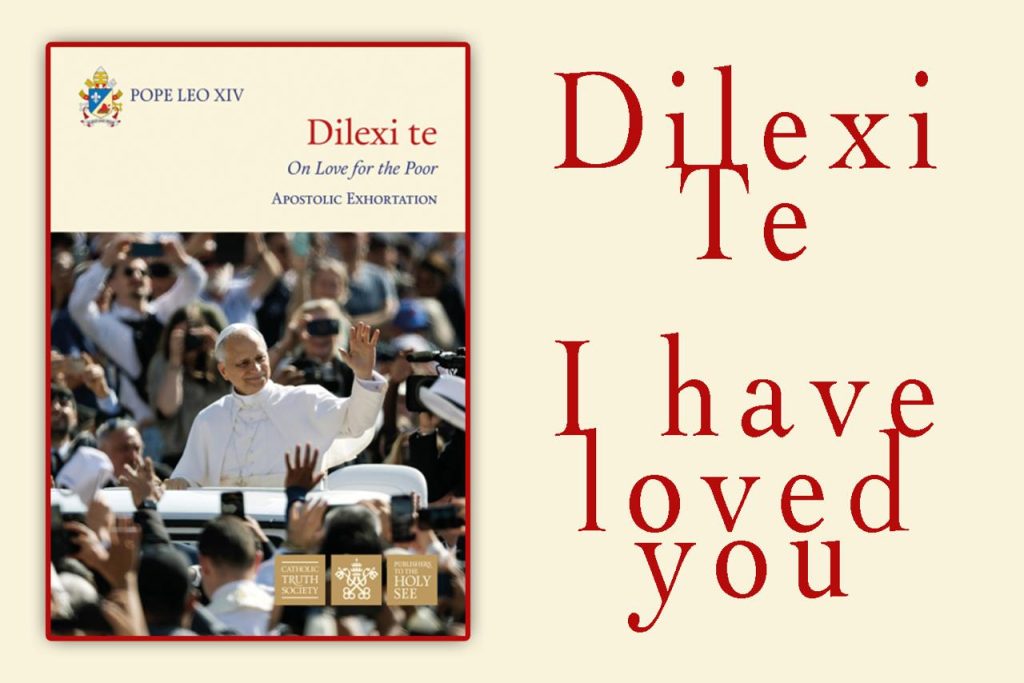
Pope Leo XIV’s apostolic exhortation
Pope Leo XIV’s first apostolic exhortation, a document focused on the call for all Christians to love and care for the poor.
The document emphasizes that caring for the poor is an essential, not optional, part of faith that is inseparable from worship, and identifies them as evangelists who help others recognize their dependence on God. It builds on Pope Francis’s teachings, broadening the definition of poverty to include modern forms like victims of ecological problems and migrants, and calls for practical application of this love through both local action and advocating for systemic change.
Here below, there are eight points to know about the document.
1. Dilexi Te is about love and care for the poor.
The apostolic exhortation is addressed “to all Christians on love for the poor,” and explores the topic through the lens of Scripture, church teaching and the witness of the saints.
2. Both Pope Francis and Leo worked on this apostolic exhortation.
Francis’ fourth and final encyclical, Dilexit Nos (“He loved us”), on the human and divine love of Sacred Heart of Jesus, was published Oct. 24, 2024, nearly six months before his death. In the prologue of the new exhortation, Leo noted the late pope was preparing this apostolic exhortation on the church’s care for the poor as a follow-up, and gave it its title. Leo wrote, “I am happy to make this document my own — adding some reflections — and to issue it at the beginning of my own pontificate, since I share the desire of my beloved predecessor that all Christians come to appreciate the close connection between Christ’s love and his summons to care for the poor.”
3. It begins and ends with Jesus’ words.
The first and last words of Dilexi Te are the same words of Jesus — “I have loved you (Revelations 3:9)” — spoken to his humble, persecuted church.
4. Scripture and church social teaching documents are referenced.
“I often wonder, even though the teaching of Sacred Scripture is so clear about the poor, why many people continue to think that they can safely disregard the poor,” the exhortation reads.
Using Scripture, Dilexi Te explores mercy and justice toward the poor as shown in both the Old and New Testaments; Jesus’ humbling of himself to become man; his poverty; and his own words on the last judgement, performing works of mercy and how we are to love our neighbor as ourselves.
5. It contains many saintly examples.
No less than 33 saints are referenced as examples of holiness in their treatment of the poor sick, imprisoned, uneducated or migrant. The example of St. Francis of Assisi in his embrace of poverty is explored early in the first chapter of Dilexi Te and again in a section on the witness of mendicant religious orders.
6. Works of mercy, spiritual care and almsgiving are recommended.
“Works of mercy are recommended as a sign of the authenticity of worship, which, while giving praise to God, has the task of opening us to the transformation that the Spirit can bring about in us, so that we may all become an image of Christ and his mercy towards the weakest.”
7. Indifference to the plight of the poor is addressed.
“No Christian can regard the poor simply as a societal problem; they are part of our ‘family.’ They are ‘one of us.’ Nor can our relationship to the poor be reduced to merely another ecclesial activity or function.” An attitude of indifference in society and among Christians to the plight of the suffering poor is rebuked.
8. God has a preferential option for the poor.
A preferential option for the poor is repeatedly mentioned in the document. “This ‘preference’ never indicates exclusivity or discrimination towards other groups, which would be impossible for God. It is meant to emphasize God’s actions, which are moved by compassion toward the poverty and weakness of all humanity. Wanting to inaugurate a kingdom of justice, fraternity and solidarity, God has a special place in his heart for those who are discriminated against and oppressed, and he asks us, his Church, to make a decisive and radical choice in favor of the weakest.”
National Catholic Reporter
Vatican City — October 9, 2025