
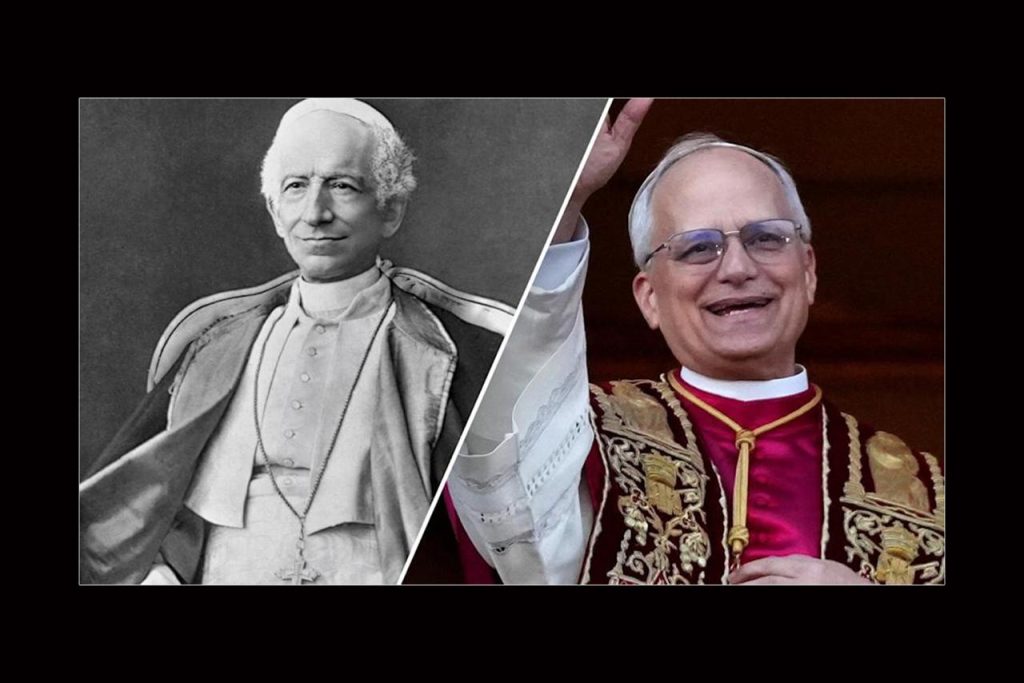
In his first meeting with cardinals on May 10, Pope Leo — also known as Robert Prevost — said there were “different reasons” behind his choice, but he was primarily inspired by Pope Leo XIII who wrote the encyclical “Rerum Novarum,” which addressed labor conditions during the Industrial Revolution.
“In our own day, the Church offers to everyone the treasury of her social teaching in response to another industrial revolution and to developments in the field of artificial intelligence that pose new challenges for the defense of human dignity, justice and labour,”
Who was Leo XIII?
He is also known as Gioacchino Vincenzo Raffaele Luigi Pecci and he reigned as the pope from 1878 to 1903. He is known mostly for writing the encyclical “Rerum Novarum” or “Rights and Duties of Capital and Labor,” which addressed the conditions of the working class.
What are the main three teaching of Rerum Novarum.
In his groundbreaking encyclical Rerum Novarum (1891), Pope Leo XIII addressed the social and economic issues arising from the Industrial Revolution. While the encyclical covers a range of topics, three main teachings stand out:
- The Rights and Duties of Capital and Labor: Pope Leo XIII emphasized the importance of cooperation between employers (capital) and workers (labor). He affirmed the right of workers to fair wages, just working conditions, and the formation of unions to protect their interests. Simultaneously, he stressed the duties of workers to perform their agreed-upon work faithfully and to respect the property of their employers. The encyclical rejected the Marxist idea of class struggle, advocating instead for harmony and mutual respect between these two essential groups in society.
- The Right to Private Property and its Social Responsibility: Rerum Novarum strongly defended the natural right to private property, arguing that it is essential for individual freedom and the well-being of families. However, this right was not considered absolute. The Pope insisted that private property comes with a social responsibility, meaning that owners have a duty to use their possessions not only for their own benefit but also for the common good and the relief of poverty.
- The Role of the State: The encyclical outlined a limited but crucial role for the state in promoting social justice. Pope Leo XIII argued that the government has a responsibility to protect the rights of all its citizens, particularly the vulnerable, including workers. This includes ensuring public order, safeguarding private property rights, and intervening when necessary to prevent or remedy injustice. However, he cautioned against excessive state intervention that would infringe upon individual and familial rights, emphasizing the principle of subsidiarity, which suggests that matters should be handled at the lowest possible level of authority.
These three core teachings of Rerum Novarum laid the foundation for modern Catholic social teaching and continue to influence discussions on social justice, economic ethics, and the role of the Church and the state in addressing societal problems.