
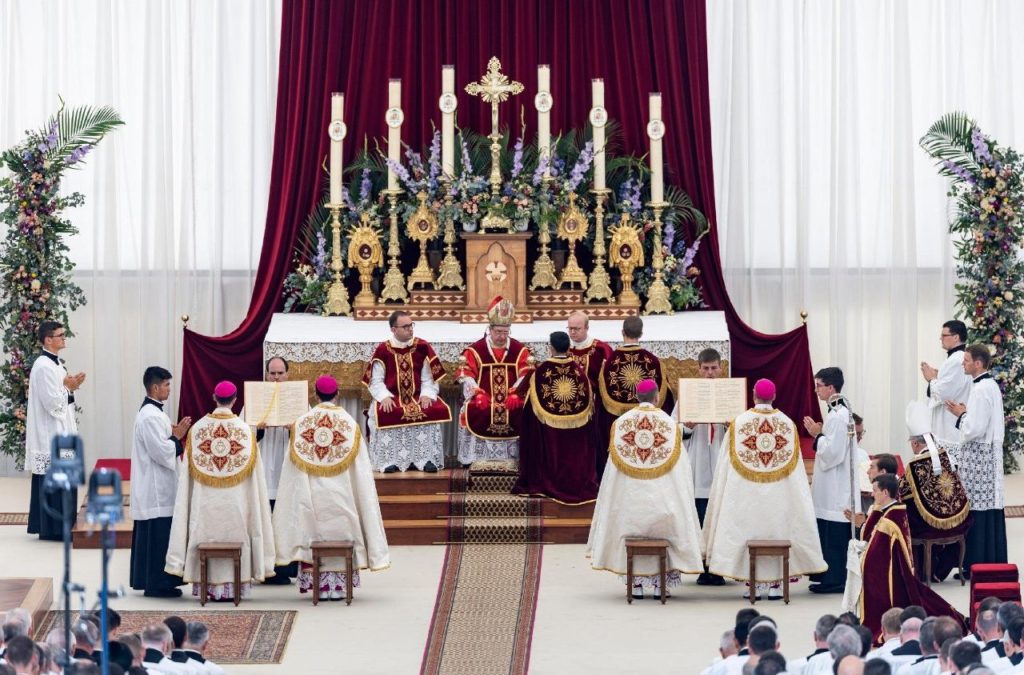
The recent schism in the Catholic Church is the direct result of the Society of St. Pius X (SSPX) proceeding with the unauthorized consecration of four new bishops on July 1, 2026, in Écône, Switzerland. This act was performed in direct defiance of Pope Leo XIV’s explicit orders and warnings, leading the Vatican to declare a formal state of schism and confirm the automatic excommunication of all six bishops involved (the four new bishops plus the two consecrators, Bishops Alfonso de Galarreta and Bernard Fellay)
The Immediate Trigger: Defiance of Papal Authority
The crisis culminated when the SSPX ignored a final, heartfelt appeal from Pope Leo XIV on June 29, 2026, in which he begged the group to “please turn back” and warned that the consecrations would be a “sin of extreme gravity” and a schismatic act. Despite this, Superior General Father Davide Pagliarani led the ceremony before a crowd of approximately 17,000 faithful people. The Vatican’s Dicastery for the Doctrine of the Faith responded on July 2 with a decree confirming that the bishops had incurred latae sententiae (automatic) excommunication the moment the rite was performed. The decree also declared that SSPX priests are now in schism, rendering sacraments like confession and marriage administered by them invalid or illicit, and warned lay faithful that formally adhering to the group carries the same penalty.
The Root Cause: Succession and the “State of Necessity”
The SSPX justified the illicit ordinations by citing a “state of necessity” to ensure the survival of their priesthood. With the death of two of their bishops in 2024 and 2025, the society faced an existential crisis: without new bishops, they would lose the ability to ordain new priests, eventually leading to the extinction of their 700-priest strong organization. Father Pagliarani argued that the need to preserve their traditionalist mission and priestly succession outweighed the requirement for a papal mandate. The group views the current Church hierarchy as having drifted from true Tradition, particularly regarding the reforms of the Second Vatican Council, and believes they are acting to save the Church from itself.
The Doctrinal Impasse: Rejection of Vatican II
Underlying the succession crisis is a decades-old doctrinal rupture. The SSPX, founded by Archbishop Marcel Lefebvre in 1970, fundamentally rejects key teachings of the Second Vatican Council (1962–1965), specifically regarding religious liberty, ecumenism, and the liturgical reforms that replaced the Traditional Latin Mass. While Popes John Paul II, Benedict XVI, and Francis made various attempts to reconcile with the group—lifting excommunications in 2009 and granting faculties for confessions and marriages—full communion was never restored because the SSPX refused to accept the Council’s authority. Pope Leo XIV had recently emphasized that unity requires accepting these fundamental elements, stating, “If they make those choices, I am sorry. But we must move forward.”
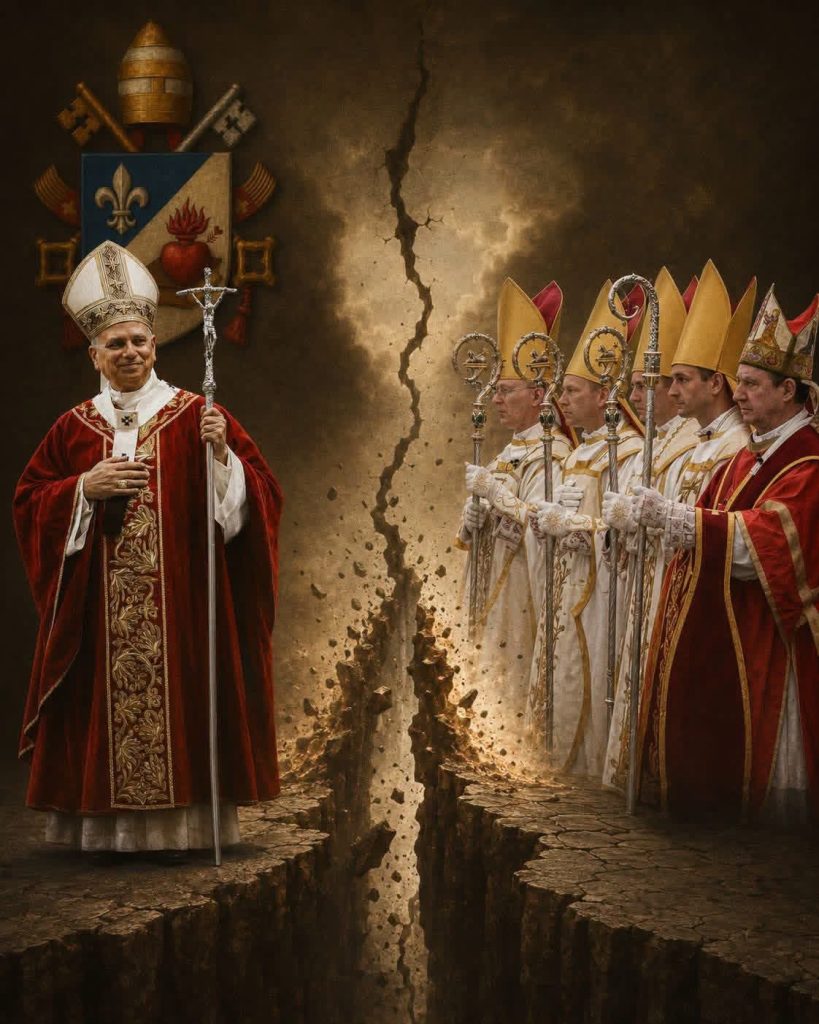
Consequences for the Faithful
The Vatican’s response in 2026 was notably harsher than in 1988, extending the declaration of schism beyond the bishops to the priests and formally warning the laity.
- Sacraments: Marriages and confessions performed by SSPX priests are now considered invalid or illicit, depriving the faithful of these spiritual benefits unless they seek them elsewhere.Â
- Excommunication: While the six bishops are automatically excommunicated, lay members are only excommunicated if they “formally adhere” to the schism (i.e., consciously placing loyalty to the SSPX above the Pope).Â
- Separation: The decree effectively severs the canonical ties that had allowed the SSPX to operate in a gray area within the Church, marking a definitive break after years of failed negotiations.
Who are the members of the Society of St. Pius X?
They are an ultra-conservative (they believe women cannot wear pants) & hyper traditionalist faction who do not recognise the decisions of the Vatican Council II especially in regards to changing how Mass is celebrated. The old mass called “the Tridentine Mass” is entirely in latin and very long and complex.
The new Mass called “Novus Ordo” is usually performed in the local language (though latin can be used and usually for high holy days and used regularly in the Vatican) and it is more simplified. SSPX have been at odds with the Vatican for decades.
Pope JP II excommunicated them for appointing bishops without papal approval. Pope Benedict lifted the excommunication to try to reconcile and have dialogue them but they were still defiant. And now they are doing it again.
Vatican City
July 1, 2026
Schism (Summary)
The recent schism in the Catholic Church was triggered by the Society of St. Pius X (SSPX) consecrating six new bishops on July 1, 2026, without the mandatory papal mandate from Pope Leo XIV. The Vatican’s Dicastery for the Doctrine of the Faith declared this act a schismatic crime, resulting in automatic excommunication for the newly consecrated bishops and all SSPX clergy, as well as invalidating sacraments like marriage and confession administered by them.
This rupture stems from the SSPX’s long-standing rejection of Vatican II reforms and their refusal to submit to papal authority, despite previous reconciliation efforts by Popes John Paul II and Benedict XVI. The group argued that a “state of necessity” justified ordaining bishops to ensure future priestly succession, but the Vatican viewed their defiance as a direct challenge to the Pope’s governance and the unity of the Church.
THE GLOBAL REACTIONS TO THE 2026 SCHISM
Global reactions to the 2026 SSPX schism have been swift and largely supportive of Pope Leo XIV’s firm stance, though with notable divisions between mainstream Catholic leadership, traditionalist circles, and secular observers.
1/ Vatican and Mainstream Catholic Leadership
The Holy See and the global episcopate have overwhelmingly endorsed the Vatican’s aggressive response. Cardinal Víctor Manuel Fernández, Prefect of the Dicastery for the Doctrine of the Faith, described the SSPX’s actions as a “painful epilogue” to decades of failed dialogue. Major bishops’ conferences—including those in the United States, France, Germany, and Argentina—issued statements reaffirming loyalty to the Pope and warning the faithful against attending SSPX liturgies. Many prelates praised Leo XIV for drawing a “clear line” to protect Church unity, noting that the invalidation of SSPX-administered sacraments (confession and marriage) was necessary to prevent confusion among Catholics.
2/ Traditionalist Catholic Responses
Reactions within traditionalist circles are sharply divided:
- SSPX Supporters: The society’s 150,000–200,000 global followers largely view the excommunications as unjust persecution. In strongholds like St. Marys, Kansas, and parts of France, SSPX leaders framed the consecrations as a “sacred duty” to preserve true Tradition against a “Modernist Rome.” Online traditionalist forums have seen an outpouring of solidarity, with some users accusing the Vatican of double standards compared to its handling of progressive dissent.
- Other Traditionalist Groups: Organizations like the Priestly Fraternity of St. Peter (FSSP) and the Institute of Christ the King, which operate in full communion with Rome, distanced themselves from the SSPX. They issued statements emphasizing that fidelity to Tradition does not require disobedience to the Pope, fearing guilt by association could jeopardize their own standing.Â
3/ Secular and Ecumenical Observers
Secular media and ecumenical partners have characterized the event as a significant but contained crisis:
- Media Coverage: Outlets like The Guardian, AP News, and NPR highlighted the schism as the first major test of Pope Leo XIV’s pontificate. Analysts generally agree that while the SSPX is numerically small (less than 0.02% of global Catholics), its defiance reflects broader tensions between religious authority and rising global conservatism. Some reports noted the presence of far-right political figures at the consecration ceremony, linking the schism to wider extremist trends in Europe and the Americas.
- Ecumenical Impact: Protestant and Orthodox leaders have largely remained silent, viewing the split as an internal Catholic matter. However, some ecumenical observers expressed concern that the hardening of Catholic traditionalism could complicate future interfaith dialogues, particularly regarding religious liberty and ecclesial authority.Â
Long-Term Implications
Experts suggest the schism marks the definitive end of the reconciliation efforts begun by Pope Benedict XVI in 2009. While the immediate impact on the broader Church is expected to be minimal due to the SSPX’s small size, the long-term concern is the potential for a “parallel church” structure to solidify, creating a permanent separatist movement that could attract disaffected conservatives worldwide. The Vatican’s harsh penalties aim to prevent this contagion by making the cost of formal adherence to the SSPX spiritually and canonically prohibitive.